
Greene County Most Wanted Fugitives
The research sweep found no stable, sheriff-hosted Greene County, Georgia most-wanted database to count or characterize. No supported number of listed people, posting schedule, photo rule, archive, reward promise, anonymous tip program, or recurring “Warrant Wednesday” feature was located. That is a specific county finding. It is not an invitation to borrow a wanted list from another Greene County.
Sheriff Donnie Harrison’s Greene County Sheriff’s Office Alerts & News page is the official place to check for selective notices. The sheriff describes alerts as concise, time-sensitive information and news as longer material that may include arrests, crime reports, seizures, and recovered property. A post can be useful and still be incomplete. It is not a maintained database of every active warrant or every person who was busted.
Photos, when an official notice includes one, stay on the originating agency page. No image is copied here. The safest reading treats any listed offense as an allegation, checks the posting date, and confirms the current status with the agency or court. A listed person may have appeared in a later court record, been taken into custody, or had the process changed after the notice was published.
The neutral sheriff notice capture below is linked to the official source at Alerts & News.
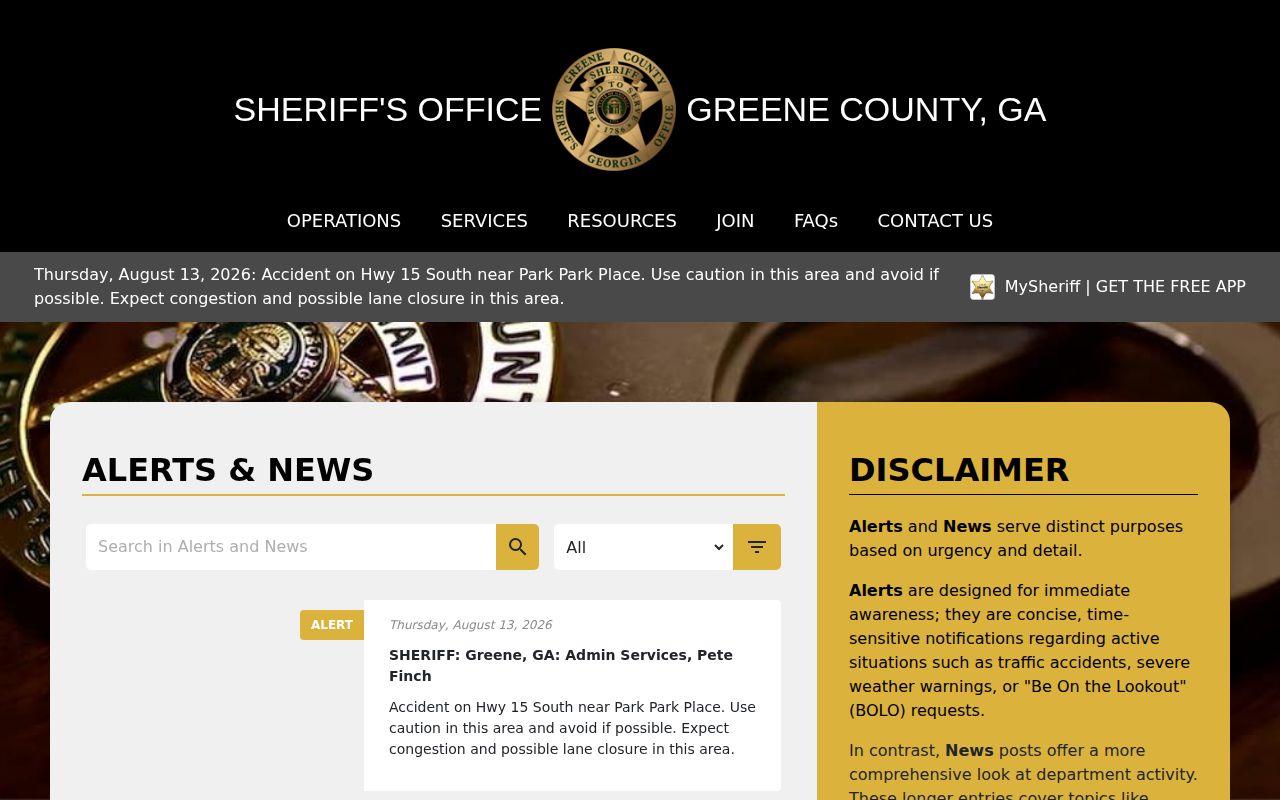
The capture documents an official communication channel. It does not turn a selective notice into a complete Greene County wanted list.
Greene Wanted Notice Fields
No maintained local list exists here. That means no field format can be promised. If the sheriff publishes a dated notice, take it exactly as written. A photo, a name, an alleged offense, or a last-known-area detail can all help investigators identify someone. None of it proves the warrant is still active, so confirm before assuming.
| Possible notice field | How to read it |
|---|---|
| Name or alias | Use as a lead, then compare identity details with the issuing agency. |
| Photograph | An agency identification image, not proof of current appearance, custody, or guilt. |
| Alleged offense | The basis described by the notice. It may differ from later filed or amended charges. |
| Warrant or case reference | A useful identifier for the clerk or sheriff, when one is supplied. |
| Last known location | A dated lead. Do not treat it as a current address or approach point. |
| Contact instruction | Use only the official tip route stated by the agency. Do not improvise contact with the person. |
A warrant is a court process or judicial authorization, depending on its type. A wanted notice is a public communication about selected allegations. Neither one is a disposition. The court decides what happens to a filed charge.
Read a Greene Wanted Notice Safely
When the sheriff posts an alert, keep the date and the exact wording. Do not download a face and recirculate it as a current booking photo. The whole point of the notice is getting solid information to the officials who can act on it.
- Open the notice from the official Greene County Sheriff’s Office domain or an account linked from that domain.
- Check the posting date, agency name, alleged offense, case or warrant reference, and any caution language.
- If a person is recognized, note the information without confronting, following, detaining, or warning that person.
- Send a tip through the official contact instructions. Use 911 for an immediate threat or emergency.
- For a record question, give the sheriff or clerk the full name and notice date, then ask what current status can be confirmed.
A social post is a shaky reference. It can be edited, deleted, or left up long after the case moves on. That makes it no substitute for a live custody check. To see whether someone later shows up in a county booking record or court case, follow the official path on the Greene County booking and mugshot page.
Greene County Tip Information
No county-specific tip line, Crime Stoppers partner, anonymity promise, or reward amount could be verified for Greene County. That gap matters. Never repeat a phone number or anonymity claim borrowed from another Georgia county. Start with the contact instructions on the sheriff's notice itself, or use the sheriff's contact directory.
Official sheriff contact
Greene County Sheriff’s Office
1201 Kevin Roberts Way
Greensboro, GA 30642
706-453-3351
Call 911 in an emergency. For a wanted-person tip, ask the office which unit handles it.
A tip and a records request are different animals. A tip passes along information that might assist an investigation. A records question asks what the agency or court can lawfully confirm about a file. Keep the two separate, and leave personal speculation out of any tip.
Greene County Warrant Check
Greene County has no public warrant-search portal to speak of. For a specific warrant question, go to the Greene County Sheriff's Office or the clerk of the issuing court. The sheriff can tell you what it will confirm remotely, and the clerk can identify the court process or docket it maintains. Match identities carefully. A name-only answer can pin the wrong case on the wrong person.
A direct check answers one question: does a named person have an active warrant? A selective notice will not do it. Silence on a sheriff page will not either. Neither will a commercial archive or a roster from the wrong state. The state warrant-instruction path is unreliable, so local confirmation is the safer route.
- Write down the person’s full legal name and any known date of birth, case number, or prior notice date.
- Contact the sheriff or the issuing clerk and ask what status can be confirmed by phone, in person, or by written request.
- Compare the county, court, case number, and charge description before assuming a same-name match.
- If the possible warrant concerns you, contact a Georgia attorney or the court about a lawful appearance. Do not seek ways to evade service.
- If it concerns another person, send information through the official agency route and do not approach that person.
Custody status and warrant status move on separate tracks. A person can hold an open warrant and still sit nowhere near the county jail. Someone else can be in custody over a different matter entirely. For either question, only two offices count. The sheriff and the court are the dependable local sources for warrant and arrest information.
Warrant Types and Court Records
The word "warrant" covers more than one kind of court process. When asking Greene County sources about a record, make them define the specific type rather than treating every warrant label as interchangeable.
| Process term | Plain meaning | Where to confirm |
|---|---|---|
| Arrest warrant | Process authorizing an arrest based on alleged conduct. | Issuing court and sheriff, with identity verification. |
| Bench warrant | Process that can follow a missed court obligation or hearing. | Court or clerk that handled the case. |
| Failure-to-appear process | A court response to a missed appearance or condition. | Case docket and issuing court. |
| Wanted notice | A selective public request for information about a person. | Originating sheriff notice, not a complete database. |
Warrants carry different statuses. A process may be active, recalled, served, or resolved some other way. Only the issuing office can tell you which. So ask two things. What is the current status? Who has the authority to state it? Remember that a warrant record and a court case are separate matters. The final outcome of the charge lives in the court file, not in the warrant itself.
MySheriff and Selective Alerts
The sheriff links the free MySheriff app as a communications tool and says registration is not required. Research did not verify an inmate roster or booking-photo module for Greene County. That makes the app a reasonable route for agency alerts and contacts, but not a substitute for a warrant check or a county booking request.
Official social notices can be useful when an agency needs fast public help. They may also be selective, edited, or removed. Note the agency, direct post URL, and date. Never infer that a person is guilty because a notice uses strong language. The accusation and the eventual disposition are separate facts.
The source image below is linked to the official Greene County court page at Greene County Courts. It shows the local court role in warrant and case confirmation, not a wanted gallery.
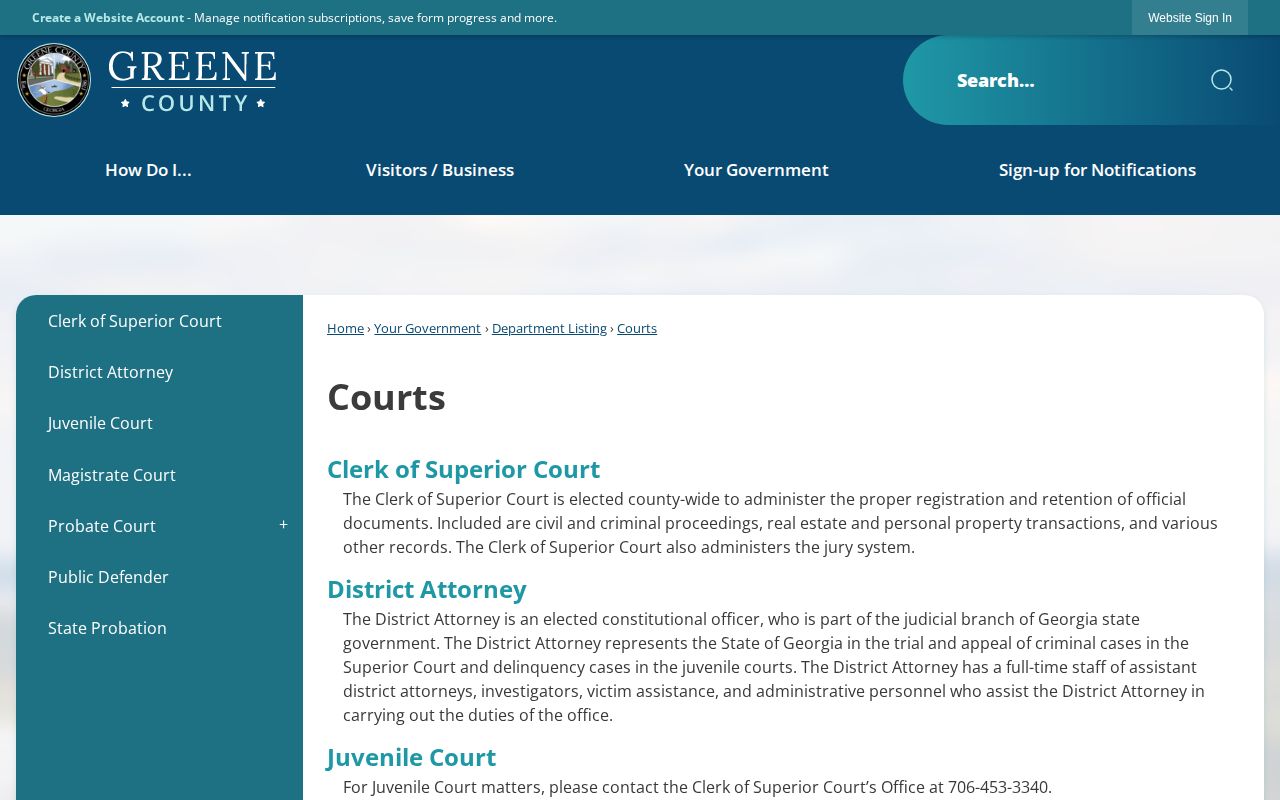
Use the clerk and court for the legal record. Use the sheriff for current agency confirmation. Use the official notice for tips. Those roles should not be collapsed into one search result.
Federal Wanted Material
The U.S. Marshals Service fugitive information pages are selective in their own way. Federal fugitive write-ups may include a photo or aliases. They are not a Greene County warrant database, though. A federal notice can stem from a different court, agency, and case than a local sheriff's notice.
Never fold a federal wanted notice into a county booking record. If the person lands in federal custody, the Bureau of Prisons locator tracks them. A local charge belongs with the sheriff and the local court. Each office can only confirm the records it keeps.
A local arrest can lead to the Greene County Detention Center for county custody. A state sentence shifts the trail to the Georgia Department of Corrections offender search. A GDC profile is neither a wanted notice nor a booking photo. Label what you find by facility and custody stage so nothing gets confused.
Safety comes first with any wanted notice. Do not approach, follow, or detain anyone. Send what you know through the official channel the notice names.
Wanted Does Not Mean Guilty
Notices can be wrong. A charge may change. A warrant may be recalled. A case may end in dismissal, and a booking photo tells you nothing about how things turned out. When identity or status looks off, the agency and the court should have the chance to correct it.
When a record question truly matters, keep a dated copy of the source. Ask for the current case number and how the case ended. A face match is not enough on its own. A search snippet is not either. Those habits protect the public and the people named in notices alike.